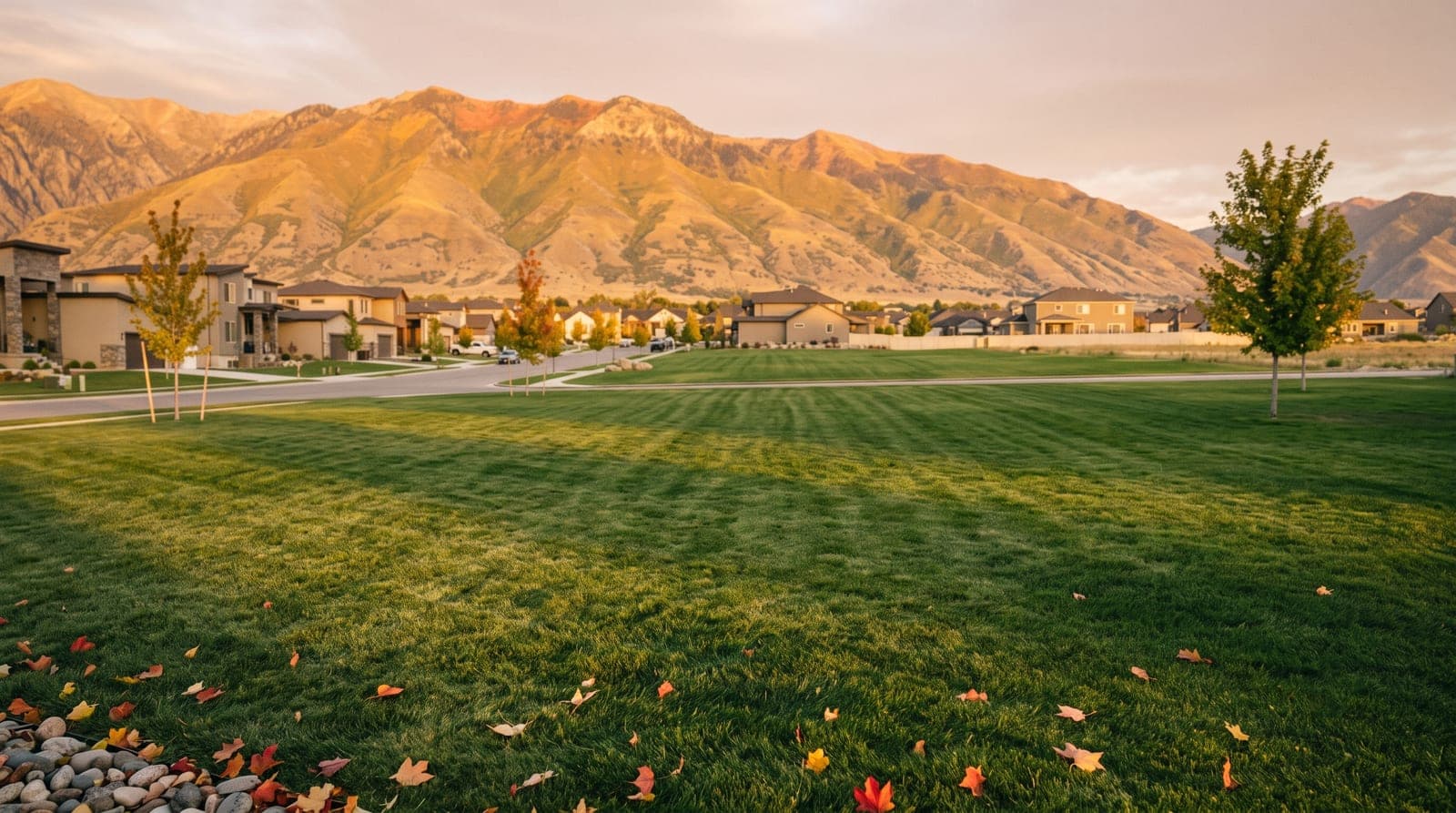
In Cache Valley, aerate your lawn from September to early October. Spring also works once the soil has dried. The right week for your lawn depends on how moist the soil is, how cold the nights have been, how the lawn came through summer, how high you mow and whether you can water afterward.
What a core aerator does
A core aerator pulls plugs of soil out of the lawn a few inches apart. The plugs stay on the surface and break down. The holes relieve compaction and let air and water reach deeper into the root zone. They also give new roots and new seed a place to grow. The machine does the same work in August as in October, but how the grass responds depends on the month.
The tines go deep only in moist soil, and new roots fill the holes only while the grass is growing them.
Fall has one good window
Most lawns in Cache Valley are cool-season grass. Most of them are Kentucky bluegrass or a blend of bluegrass and fine fescue. In fall these grasses respond well to aeration for a few weeks and poorly on either side of them.
Late August is too early
Plug holes dry out fast in late August because the soil is often still hot and dry. The grass is still recovering from summer heat and has little to spend on new roots. The holes close before many new roots reach them.
Mid-October and later is too late
By mid-October, cold nights have cooled the soil, and the grass slows down for winter. Few new roots grow into the open holes. You may still see empty holes the next spring.
September to early October is the window
In September the days cool off while the soil still holds summer heat, and the nights bring more moisture. Cool-season grass grows roots fast in this stretch. If you aerate now, new white root tips grow into the plug holes. Because seed sprouts well in warm soil and cool air, this is also the best time to overseed.
Spring aeration works once the soil dries
Wait until the soil has dried out from snowmelt and the grass has started to grow. If you aerate wet soil, the tines smear the sides of the holes and pack the soil around them.
How we schedule aeration
Fertilizer + Fall Renovation replaces the September feed with core aeration and overseeding. We also put down starter fertilizer for the new seed. Complete Lawn and Pest includes the same visit. We make that visit from September to early October and do not treat weeds on the new seed. We come back in October with a winterizer feed.
You can also book core aeration on its own in spring or fall. Core aeration costs $120 for a 6,000 sq ft lawn. Fall renovation on its own costs $360 for a 6,000 sq ft lawn.
Seed needs a moist surface to sprout. Water the new seed every day for about two weeks after a fall renovation.
Ask us to price your lawn
If you want core aeration or fall renovation, request a free assessment. Your price depends on the size of your lawn. We measure the lawn at the free assessment.