An annual program,
not a route sheet.
Six visits, each timed to your property's growth cycle and soil data. A full lab soil panel each year, plus mid-season field calibration. One pricing tier, calibrated to your lawn's size and current condition.
JUST NEED ONE THING? SEE À LA CARTE SERVICES →- The base covers soil testing infrastructure, drive time, setup, calibrated spreader work, and continuous perimeter pest coverage across 5 of the 6 visits.
- The per-sqft rate covers product, application, and lawn-specific blending.
- Final price is locked at your on-site assessment — never higher than calculated here.
You don't have to wait for spring.
The six visits below run spring through fall, but new customers can join any time — and fall is the strongest possible entry point. The annual soil lab panel, core aeration, and the season's key feed all land in the same fall visit. We start you there, prorate the remaining visits, and the full program picks up the following spring.
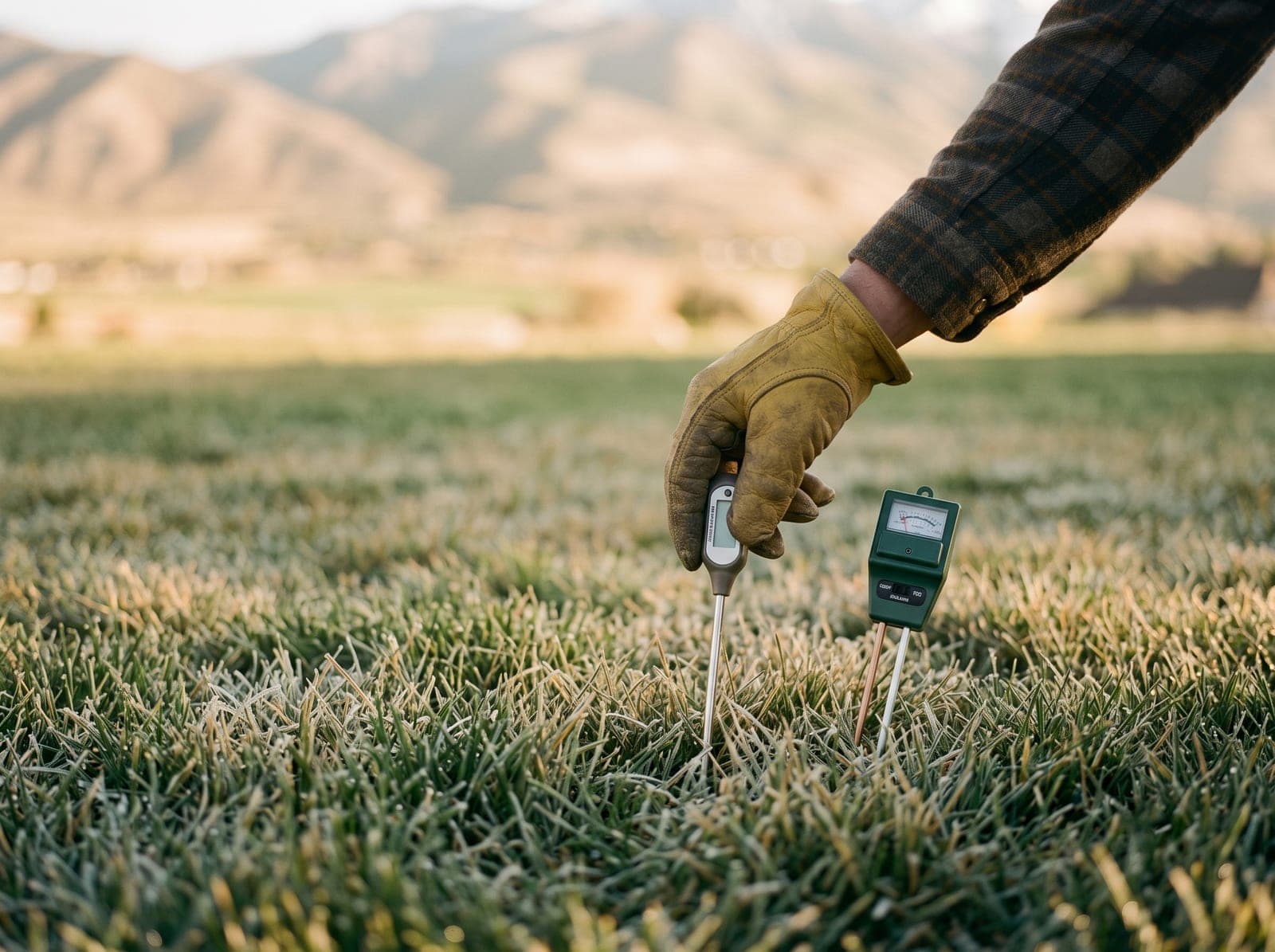
Pre-emergent + field check.
We open the season with a field check — a soil-temp gun and a spot pH meter to calibrate timing against this year's conditions and last fall's lab panel. It's a calibration, not a lab test. Alongside it, a pre-emergent barrier timed to the actual soil temperature, not the calendar. What we don't do yet is feed: we don't push nitrogen before the roots can use it. Early-spring feeding forces top growth at the expense of root reserves and invites weeds — so in spring we test and protect, and we feed once the lawn is actively growing. (New and renovation lawns are the exception: we pull a full baseline lab panel at this first visit.)

Granular fertilization.
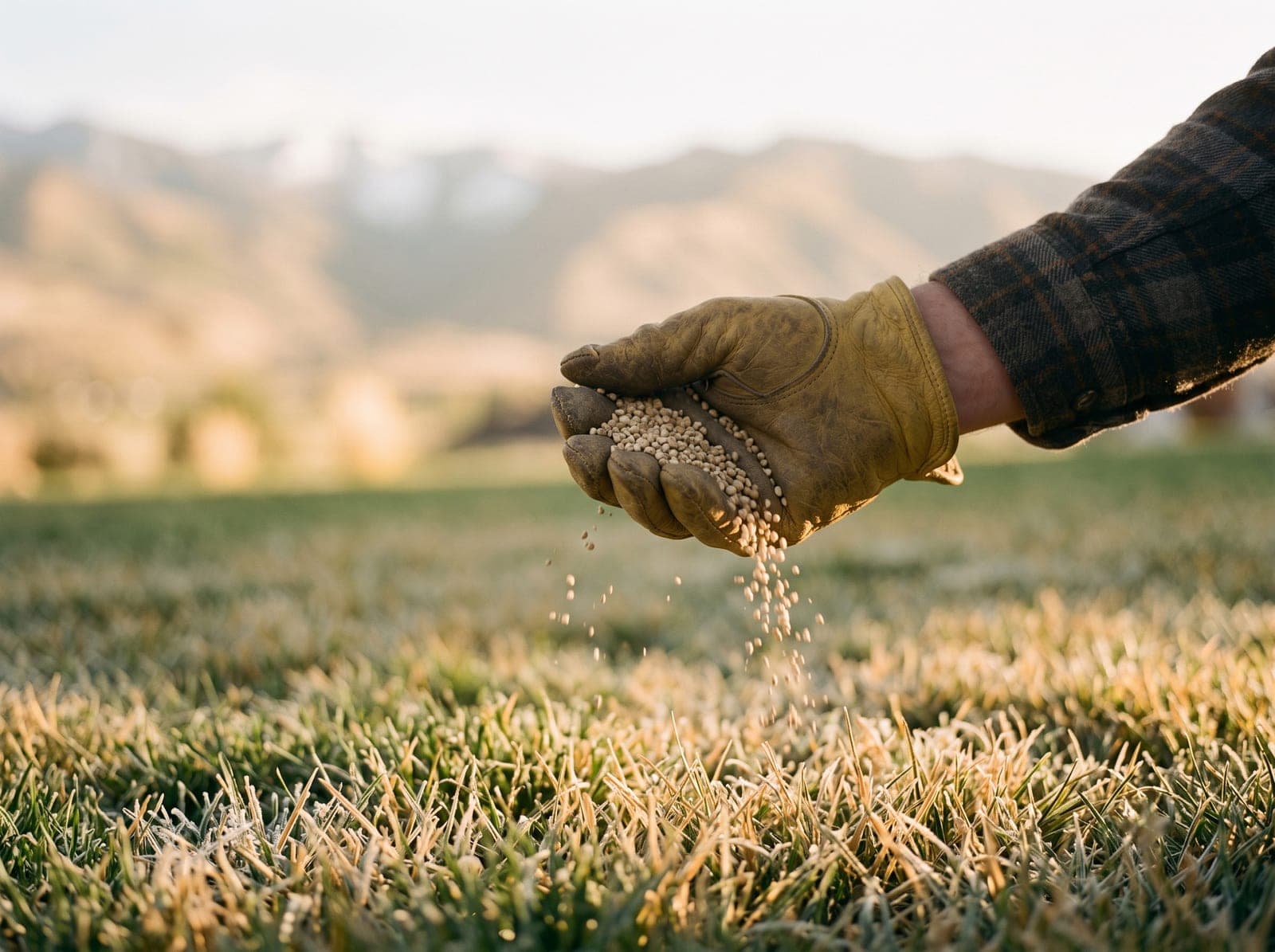
Slow-release N-P-K, blended to match your soil report results. If your potassium is low, we increase K. If your pH is acidic, we work in lime. The blend is custom — not a bag we threw on the truck Monday morning. Layered with the first perimeter pest application of the season.
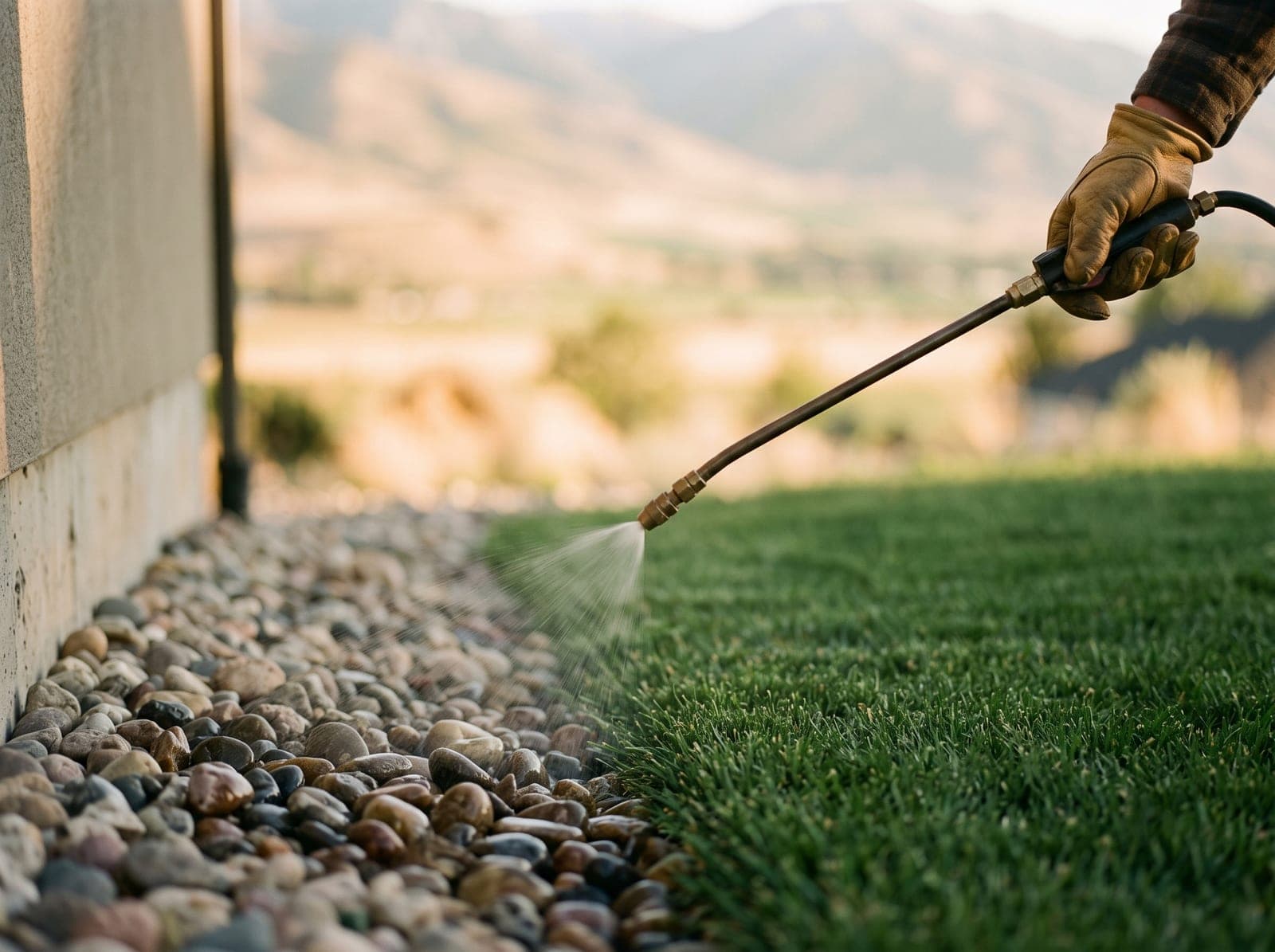
Perimeter pest + broadleaf.
Peak ant and spider emergence. A 10-foot exterior barrier treatment around your home keeps ants, spiders, earwigs, and box elder bugs out. While we're on-site, we spot-treat any broadleaf weeds — dandelion, clover, plantain — that broke through the spring application.
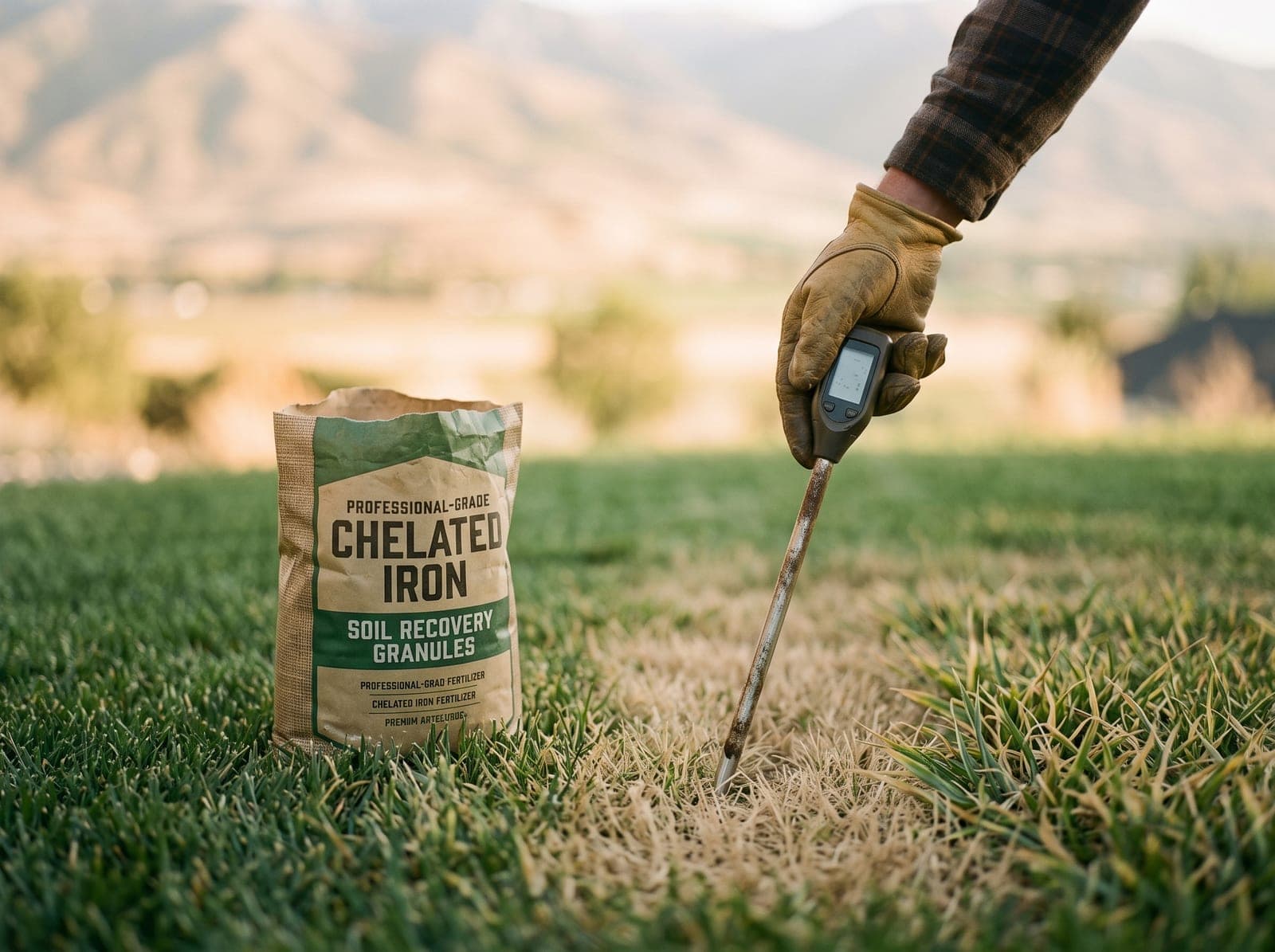
Summer feed + field check.
Mid-season, we come back for a light summer feed and a field check — a moisture probe and a portable pH meter to spot-check your soil against last fall's panel (a calibration, not a lab test). If conditions shifted, and in Cache Valley summers they do, we adjust the second-half plan. Nitrogen stays low through the heat and iron carries the color, so the lawn holds deep green without growth it can't support. Layered with the heaviest-pressure perimeter pest application of the year.
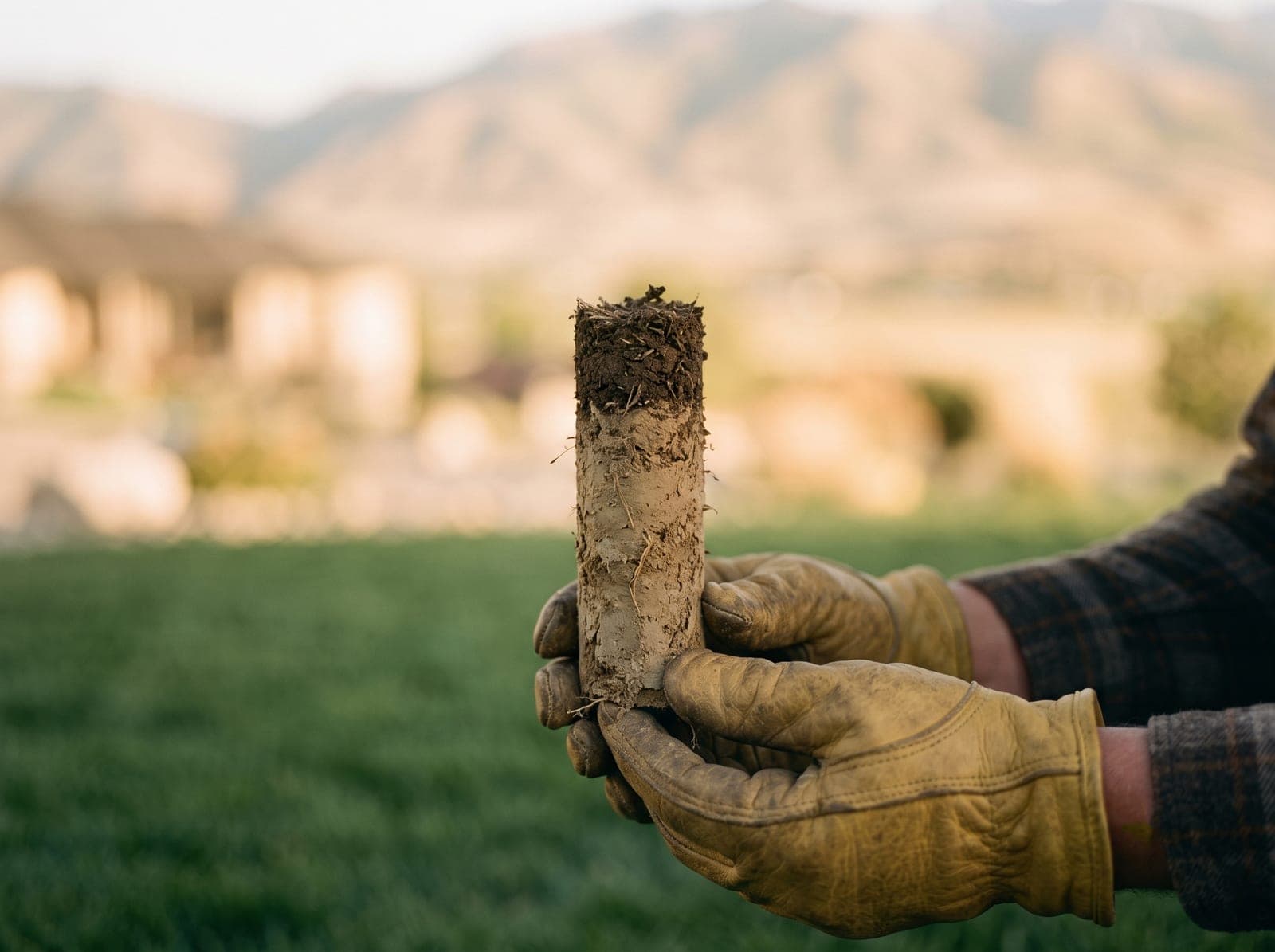
Soil panel + core aeration.
Fall is the most important visit of the year, and it's where your annual soil test happens — a 12-point core sent to the lab for pH, organic matter, N-P-K, and compaction, with a written report that drives the winterizer blend and next spring's plan. We core-aerate as we sample, so the soil is open: the cleanest core, and the best delivery path for the season's key feed — a slow-release nitrogen blend that rebuilds root reserves. It's also the single best window to thicken thin turf with overseed, and we lay down the fall perimeter pest application to head off box elder bug and cluster fly invasions.
Winterizer + final barrier.
A cold-tolerant nitrogen blend feeds the roots while the canopy goes dormant — this is what gives Cache Valley lawns their early-spring green. We also apply the final perimeter pest treatment to seal the season's pest protection through winter.
The same six visits, calibrated to your grass.
Most Cache Valley lawns are Kentucky bluegrass–dominant blends, so the bluegrass program is our default. But the right feeding rate, mowing height, and overseeding depend on what's actually growing — we identify your grass at the on-site assessment and calibrate. These four set the range.
The valley standard. Self-repairing, with fall-weighted feeding.
Feeds the most; overseeded every fall (it can’t self-repair).
Lighter feeds; never pushed in summer heat (disease-prone).
Half the inputs. Over-feeding is the #1 mistake — no summer N.
N = LB NITROGEN / 1,000 SQFT PER YEAR · TARGETS CALIBRATED TO EACH SOIL REPORT, NEVER FIXED
What's always included.
One lab panel + field checks
A full fall lab panel — pH, OM, N-P-K, compaction — pulled at aeration, plus spring and mid-summer field checks. The written report is yours to keep.
Calibrated applications
Every blend customized to your soil report. Granular spreader calibrated per property — no eyeballing.
Written notes after every visit
Photos, observations, and recommendations emailed within 24 hours. You'll never wonder what got done.
Pet & kid safety windows
Every product we use is labeled with its safe re-entry time. Posted on every yard sign we leave.
One owner, one truck
One person does every visit. You're not handed off to a rotating crew on a route sheet.
Annual summary
A November year-end report built on the fall lab panel and the season’s field notes, with the plan for next season.
Five applications. Year-round coverage.
Most companies treat perimeter pest quarterly — and you feel the gap in July. Our program layers a perimeter barrier into 5 of the 6 visits, on roughly 6-week spacing through the season. The result is steady protection from spring through fall, included in your annual price.
Need just one treatment?
If your dandelions exploded this spring and you're not ready to commit to a full program, we'll handle it. One-off weed treatments are a separate service — no contract, no follow-up sequence.
Spot treatments handle the immediate problem, but if your lawn has chronic weed pressure, it usually means something underneath needs attention — soil pH, compaction, thin turf, or watering. The annual program addresses the cause. A single visit addresses the symptom.